- Veterinary PCD & Third Party Manufacturing
- +91-9023639358
- vetnationpharma@gmail.com

Feed Supplement vs Veterinary Medicine
Feed Supplement vs Veterinary Medicine: Understanding the Key Differences in Animal Healthcare – Vetnation Pharma
Managing animal health effectively requires a clear understanding of the tools and solutions available today. Whether you manage a commercial livestock farm, operate a poultry unit, oversee aquaculture production, or care for companion animals, maintaining optimal health and productivity is a top priority. However, one common area of confusion among livestock farmers, animal owners, and managers is the topic of feed supplement vs veterinary medicine.
While both product categories play vital roles in modern animal healthcare, they serve fundamentally different purposes. Confusing a feed supplement with a veterinary medicine can lead to improper animal management, delayed medical treatments, or inefficient dietary practices. Understanding the distinction between feed supplement vs veterinary medicine empowers farmers and animal owners to make informed, safe, and cost-effective decisions.
In this comprehensive guide, we will explore the core differences between feed supplements and veterinary medicines, their specific purposes, key benefits, limitations, and practical applications across various species.
What Is a Feed Supplement?
A feed supplement is a nutritional product designed to complement an animal’s standard daily diet. These formulations supply essential nutrients that may be lacking, deficient, or required in higher quantities during specific life stages. Feed supplements for animals typically contain vitamins, minerals, amino acids, fatty acids, probiotics, enzymes, or herbal extracts.
Feed Supplement = Nutrition & Prevention
(Complements daily feed to support growth, immunity, and metabolic functions)
It is important to emphasize that livestock feed supplements and animal health supplements are not classified as pharmaceutical drugs. They do not diagnose, cure, or treat specific biological diseases. Instead, they support general health, enhance metabolic efficiency, improve feed conversion ratios ( FCR ), and reinforce natural immunity.
What Is Veterinary Medicine?
A veterinary medicine is a pharmaceutical, biological, or chemical formulation specifically developed and regulated to diagnose, prevent, mitigate, or cure illnesses, infections, and medical conditions in animals. These veterinary products undergo rigorous testing and regulatory approval processes to ensure therapeutic efficacy and safety.
Veterinary Medicine = Targeted Treatment & Control
(Diagnoses, treats, controls, or prevents specific diseases and infections)
Veterinary medicine includes antibiotics, anthelmintics (dewormers), vaccines, anti-inflammatory drugs, analgesics, parasiticides, and hormonal therapies. Unlike general animal nutrition products, veterinary medicines act directly on biological targets or pathogens within the animal’s body to manage disease or relieve clinical symptoms.
Feed Supplement vs Veterinary Medicine: Key Differences
To better understand feed supplement vs veterinary medicine, it helps to compare them across key parameters such as primary function, active ingredients, regulatory oversight, and usage conditions.
| Parameter | Feed Supplement | Veterinary Medicine |
| Primary Objective | Supports overall animal nutrition, growth, and physiological performance. | Diagnoses, treats, cures, or prevents specific diseases and clinical conditions. |
| Composition | Vitamins, minerals, trace elements, enzymes, probiotics, amino acids. | Active pharmaceutical ingredients (APIs), antibiotics, vaccines, anti-inflammatories. |
| Administration | Mixed directly into daily feed or drinking water routinely. | Administered orally, topically, or via injection based on specific dosage protocols. |
| Regulatory Status | Regulated under feed safety and nutritional guidelines. | Regulated strictly as pharmaceutical drugs under veterinary regulatory authorities. |
| Prescription Need | Available over the counter (OTC); generally no prescription needed. | Frequently requires a prescription or strict supervision from a licensed veterinarian. |
| Onset of Action | Gradual, continuous support over time. | Immediate to fast therapeutic response to target active disease or pain. |
| Primary Focus | Health maintenance, deficiency prevention, and production optimization. | Disease eradication, infection control, and acute care. |
Purpose and Role of Feed Supplements
Understanding the detailed comparison of feed supplement vs veterinary medicine starts with examining the exact functions of nutritional inputs. Nutritional supplements for livestock serve several vital functions in modern animal husbandry:
- Bridging Nutritional Deficiencies: Forage, pasture, and standard commercial feeds may lack adequate amounts of essential micro-nutrients. Livestock feed supplements fill these dietary gaps.
- Enhancing Growth and Productivity: In commercial dairy, poultry, and swine farming, supplements support peak milk yield, improved egg shell quality, optimal body weight gain, and better feed conversion.
- Supporting Natural Immunity: Nutrients like Vitamin C, Vitamin E, Selenium, and probiotics strengthen the immune system, helping animals better withstand environmental stress.
- Improving Digestive Health: Enzymes and gut health modulators improve nutrient absorption and maintain a balanced intestinal microbiome.
- Managing Physiological Stress: During transportation, heat stress, vaccination schedules, or weaning, nutritional supplements keep physiological balance intact.
Because feed supplements focus on wellness rather than active disease, they are essential tools for long-term health maintenance.
Purpose and Role of Veterinary Medicines
While nutrition lays the foundation for wellness, diseases and infections can still occur due to pathogens, biosecurity breaches, or environmental factors. This highlights the indispensable role of veterinary medicine in animal healthcare:
- Targeting Pathogenic Infections: Antibacterial, antifungal, and antiviral medications eliminate or inhibit harmful micro-organisms causing acute or chronic illness.
- Controlling Parasitic Infestations: Internal parasites (worms, flukes) and external parasites (ticks, mites, lice) require specialized antiparasitic medicines to prevent systemic damage and anemia.
- Relieving Pain and Inflammation: Anti-inflammatory drugs and analgesics alleviate distress associated with injuries, surgeries, or musculoskeletal disorders.
- Immunization and Disease Prevention: Vaccines trigger targeted antibody production, protecting herds and flocks against contagious biological outbreaks like Foot-and-Mouth Disease, Newcastle Disease, or Rabies.
- Restoring Physiological Homeostasis: Targeted pharmaceutical formulations address clinical metabolic disorders, acute organ distress, and endocrine imbalances.
In evaluating feed supplement vs veterinary medicine, remember that medicines deliver direct therapeutic intervention when physiological defenses are breached.
When Are Feed Supplements Commonly Used?
Knowing when to apply feed supplements for animals helps optimize operational efficiency and prevent health declines before they start.
Common scenarios where feed supplements are appropriate include:
- Daily Herd or Flock Maintenance: Routine addition of essential mineral mixtures to support daily metabolic needs.
- Peak Production Stages: During high lactation in dairy cattle, peak laying cycles in poultry, or rapid growth phases in broiler chickens.
- Environmental Stress Events: Supplying electrolytes and antioxidants during hot summer months to combat heat stress.
- Transition Periods: Supporting animals during dietary changes, post-calving recovery, or weaning transitions.
- Preventing Deficiency Symptoms: Administering calcium and phosphorus supplements to prevent conditions like milk fever or weak skeletal structures.
Using animal health supplements during these proactive moments prevents performance dips and supports long-term profitability.
When May Veterinary Medicine Be Needed?
Feed supplements cannot replace pharmaceutical treatment when an animal suffers from an active pathological disease. Understanding feed supplement vs veterinary medicine means recognizing the signs that demand clinical medical intervention.
Veterinary medicine is required in situations such as:
- Observable Clinical Signs of Illness: Symptoms like high fever, severe lethargy, nasal discharge, bloody stool, or drastic appetite loss.
- Bacterial or Viral Outbreaks: Sudden, rapid spread of infection across a herd or flock requiring prescription antimicrobial therapy or emergency vaccination.
- Severe Parasitic Load: Heavy internal or external parasitic attacks that impair growth, cause severe anemia, or damage vital organs.
- Acute Traumatic Injury or Surgery: Open wounds, fractures, or surgical procedures needing pain management, antiseptics, and antibiotics.
- Diagnostic Pathology: Conditions confirmed by laboratory tests or veterinary examination that require regulated drug dosages.
Delaying necessary treatment by attempting to treat systemic infections solely with dietary supplements can jeopardize animal welfare and lead to unnecessary losses.
Feed Supplements vs Veterinary Medicines for Different Animals
The distinction between feed supplement vs veterinary medicine applies across various animal species, each having unique physiological demands:
1. Dairy Cattle and Ruminants
- Feed Supplement: Mineral mixtures, liver tonics, bypass fats, and calcium gels used daily to maintain high milk production, metabolic stability, and reproductive health.
- Veterinary Medicine: Antibiotics for mastitis, dewormers for internal helminths, and anti-inflammatory drugs for acute lameness or respiratory infections.
2. Poultry Farming
- Feed Supplement: Amino acids, gut-acidifiers, trace minerals, and Vitamin D3 added to mash or drinking water to support feathering, bone strength, and eggshell thickness.
- Veterinary Medicine: Antibacterials for Mycoplasma or E. coli infections, anticoccidial agents, and viral vaccines to prevent severe mortality.
3. Companion Animals (Dogs, Cats, Horses)
- Feed Supplement: Joint support formulations (Glucosamine/Chondroitin), Omega-3 fatty acid oils for coat shine, and oral probiotics for sensitive digestion.
- Veterinary Medicine: Heartworm preventatives, prescription antibiotics for ear/skin infections, heart medications, and surgical anesthetics.
How to Choose the Right Option
When deciding between a feed supplement vs veterinary medicine, livestock managers and animal owners should evaluate the situation carefully:
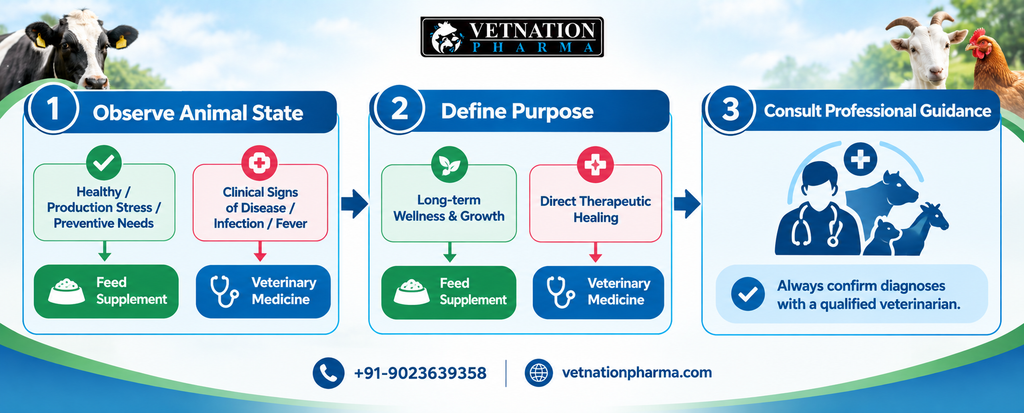
- Assess the Animal’s Health Status: Is the animal eating, active, and showing normal behavior? If yes, but performance needs a boost, a feed supplement for animals is appropriate. If the animal shows signs of pain, lethargy, or distress, a veterinary medicine is likely needed.
- Identify the Goal: Is your goal to support normal daily physiology, or are you trying to cure an active disease?
- Check Product Labels: Review active ingredients, registration numbers, usage directions, and dosage guidelines.
- Consider Cost Efficiency: Proactive nutritional support reduces the overall risk of disease, minimizing expensive emergency veterinary treatments down the road.
Importance of Veterinary Guidance
While modern animal health supplements and veterinary products are readily available, consultation with a qualified veterinarian remains paramount.
A qualified veterinarian provides:
- Accurate clinical diagnosis through physical examinations and lab tests.
- Correct identification of disease pathogens to prevent misdiagnosis.
- Precise drug dosage and administration guidelines, avoiding drug resistance.
- Guidance on withdrawal periods for meat and milk to maintain food safety.
- Balanced nutritional recommendations tailored to specific farm conditions.
Relying on veterinary expertise ensures that both supplements and medicines are used safely, ethically, and effectively.
Role of Vetnation Pharma in Animal Healthcare
As the global demand for sustainable livestock production and companion animal wellness grows, high-quality manufacturing standards become increasingly critical. Vetnation Pharma plays an active role in the animal healthcare ecosystem by focusing on quality formulations across nutritional and health categories.
Vetnation Pharma emphasizes research-backed product development, ensuring that livestock producers, poultry farmers, and animal owners have access to dependable solutions. By offering scientifically formulated livestock feed supplements alongside trusted veterinary products, Vetnation Pharma supports sustainable farming practices, optimized animal welfare, and better productivity yields.
Understanding the distinct value of both nutrition and medical therapy allows companies like Vetnation Pharma to deliver balanced options for every stage of animal care.
Frequently Asked Questions (FAQs)
1. Can a feed supplement replace a veterinary medicine when an animal is sick?
No, a feed supplement cannot replace a veterinary medicine. Feed supplements are formulated for daily nutritional support, deficiency prevention, and immunity building. They lack the active pharmaceutical agents required to kill pathogens, reduce clinical fever, or treat active infections. Sick animals require clinical diagnosis and veterinary medicines.
2. Do feed supplements for animals require a veterinarian’s prescription?
In general, most feed supplements for animals are over-the-counter (OTC) products and do not require a prescription. However, consulting a qualified veterinarian or nutritionist is recommended to choose the correct supplement formulation for your herd or flock’s specific needs.
3. Can feed supplements and veterinary medicines be given together?
Yes, in many cases, feed supplements and veterinary medicines are used side-by-side. For instance, giving liver tonics, electrolytes, or probiotics alongside antibiotic treatment can help animals recover faster and maintain gut health. Always verify compatibility with your veterinarian.
4. How do I decide between a feed supplement vs veterinary medicine for my herd?
Observe your animals closely. If they appear healthy and your goal is to enhance growth, increase milk/egg yield, or minimize seasonal stress, use livestock feed supplements. If animals show physical signs of disease like coughing, fever, lesions, or severe diarrhea, seek veterinary medicine treatment immediately.
5. Do feed supplements have meat or milk withdrawal periods?
Nutritional feed supplements usually do not have withdrawal periods because they consist of vitamins, minerals, and natural dietary components. In contrast, many veterinary products (especially antibiotics and antiparasitics) have strict mandatory withdrawal periods before meat, milk, or eggs can be safely marketed.
Conclusion
Understanding feed supplement vs veterinary medicine is essential for responsible animal management. To summarize:
- Feed Supplements: Designed to complement daily diets, correct micro-nutrient deficiencies, build natural immunity, and optimize growth and production parameters. They are preventive and supportive tools.
- Veterinary Medicines: Formulated to diagnose, treat, manage, or cure specific diseases, biological infections, and clinical ailments under regulated guidelines. They are therapeutic tools.
Neither category can completely replace the other. A well-balanced diet supplemented with necessary vitamins and minerals reduces disease vulnerability, while targeted veterinary medicines protect animals when active infections strike. By combining proper animal nutrition, timely medical intervention, and professional veterinary guidance, farmers and animal caregivers can ensure long-term health, welfare, and operational success.
